Our own platform. Our own method.

From your first workflow to your own AI product.

We bring AI into the systems where your work already happens — as a bounded workflow, as an integration across your landscape, or as a product of your own. Always on AIonicOS, our base that is already running, with approval at the point where the decision is made today.

Fixed price for the agreed implementation scope. Operations and AI usage are quoted separately.

AIonicOS

A single case runs under control — with approval where the decision is made today.

A single case runs under control — with approval where the decision is made today.

AI capabilities are added to the systems you already use.

Where a workflow is not enough, a standalone application gets built.

One base

One base. Three outcomes.

AIonicOS is the shared technical core. What comes out of it follows the undertaking — not a product catalogue.

Bounded process

A workflow in operation

A case someone handles by hand today runs under control: connected to your source systems, with rules, exception handling and an approval step where the decision is made today.

See typical starting points

AI across your system landscape

Capabilities that get added

Indexed company knowledge, extraction, classification, drafting and decision preparation — connected to the systems you already use. Your landscape stays; the capabilities get added.

See the integrations

An application of your own

A product on the same base

Where a workflow is not enough, we build a standalone application — same method, same acceptance. Lead Pilot for B2B sales was built in-house.

See Lead Pilot

Access to the workflow track

Agentic Platform · Enterprise

AIonicOS

Our own platform core: connects your systems, picks the right model for each step, and records every approval.

For work that spans several departments, approval levels, and systems such as ERP, MES, and QMS.

Understand AIonicOS

Launchstack · Startups & SMEs

AiLoft Launchstack

Entry offer

For small companies and startups: one result, up to three source systems, one approval step, no platform license.

Explore AiLoft

Why both at once

We standardise the foundation. Not your business process.

Anyone automating a process usually weighs two routes: a ready-made base that stands up quickly, and an implementation cut precisely to their own organisation. We do not have to make that trade. The orchestration base your workflow runs on is already built — what gets built for you are the connections and the process logic you actually need.

  1. Ready-made toolkit

    Stands up quickly. How far it carries depends on how close your process sits to the pattern those blocks were designed for.

    Quick to run
    Fits your process
  2. Custom build

    Cut to fit precisely. The effort depends on how much of the groundwork has to be created first.

    Quick to run
    Fits your process
  3. startvisor.AI

    Your process logic is built for you — on an orchestration base that already runs and is not rebuilt for every project.

    Quick to run
    Fits your process

Why tailored does not start from zero

We understand the work behind the process

We do not just establish which systems get connected. We translate your workflows, exceptions and responsibilities into unambiguous rules and checkable results. What gets automated, where the decision stays with a person, and how success is recognised are settled before implementation.

The platform base is already there

AIonicOS orchestrates models, company knowledge, tools and approvals. That groundwork is not rebuilt for every project — this is where the time advantage actually comes from. What is built for you are the connections and the process logic. Which model handles a given work step follows from the task, its data requirements, and the agreed quality and cost targets.

TAC organises the engineering

The agreed specification becomes scoped development tasks. Development agents work on them with structured project context, defined tool permissions and automated checks — in parallel where tasks can be separated safely. Integration, business review and controlled release stay with us. This shortens the iterations; it does not replace a test or an acceptance.

The time advantage comes from reuse and a controlled engineering procedure, not from fewer tests. What is actually supported in your environment is put in writing before implementation. See all ten commitments

Workflow track · three examples

Where companies begin with us.

Every starting point is a single, clearly bounded process — not a programme, not a platform rollout. What comes next is decided by the results of the first workflow.

Handling service requests

  1. The problem today

    Requests arrive across several mailboxes, get sorted by hand, and sit there until someone has time. Chasing the missing detail costs more time than the answer itself.

  2. The result in operation

    Every request is classified, enriched with case and inventory data, and filed in the ticket system as a finished draft reply.

  3. Human approval

    The draft only goes out once the responsible person in service has approved it.
Resolving supplier discrepancies

  1. The problem today

    Quantities, dates, and prices differ between purchase order, delivery note, and invoice. Resolving them runs on spreadsheets and phone calls.

  2. The result in operation

    Discrepancies are compared document by document, grouped by cause, and handed to purchasing with a reference to each source document.

  3. Human approval

    Credit note, back-charge, or release for payment remains a purchasing decision.

Preparing documents and approvals

  1. The problem today

    Quotes, contracts, and review files are assembled from templates, scattered predecessor documents, and knowledge held by individuals.

  2. The result in operation

    The document is produced from approved sources, every statement stays traceable to its origin, and deviations from the template are flagged.

  3. Human approval

    The business owner and, where required, legal sign off before anything is sent.

Your process is not listed? See more workflow examples

Example workflow · Procurement & quality Demo · synthetic data

Procurement & quality

Supplier deviation to resolution

A reported supplier deviation must be traced to affected lots and purchase orders, then resolved with verifiable evidence.

  1. Existing sources

    • MES
    • ERP
    • QMS
    • DMS
    • Supplier portal
  2. Governed operation

    1. Correlate the deviation with material, lot, and purchase order.
    2. Block affected inventory and coordinate containment with the supplier.
    3. Check root-cause and effectiveness evidence and prepare the QMS case for approval.
  3. Approval & policy

    Human approval The quality owner approves the supplier response and inventory release.

    Policy gate The case remains open until cause, impact, and effectiveness evidence are complete.

  4. Verified outcome

    An approved corrective action with resolved inventory status and a complete QMS history.

    Approved corrective-action record in the QMS

    Documented block or release state for affected lots

  5. Measurement per run

    Run time, source coverage, approval status, exception rate, and AI usage are recorded per run.

A demonstration using synthetic data, not a customer project. It shows the structure, control points, and result of one scoped workflow. For your case, test cases are built from real transactions; production release follows access, testing, and acceptance.

AI integration

Your system landscape stays. The capabilities get added.

We do not replace systems. We connect the ones you use today and layer on the AI capabilities the process actually needs.

Choose a system

AIonicOS

    • Extraction
    • Reconciliation & checks
    • Decision preparation

    Order, delivery and invoice data are compared, deviations named and put forward for decision with a document reference.

  • Company knowledge (RAG/CAG)
  • Extraction
  • Classification & routing
  • Drafting
  • Reconciliation & checks
  • Decision preparation

ERP (e.g. SAP) Extraction, Reconciliation & checks, Decision preparation. Order, delivery and invoice data are compared, deviations named and put forward for decision with a document reference.

Connections run over your systems’ existing interfaces and permissions. If a needed interface is missing, we say so before you place the order — instead of working around it during implementation.

The offer

One process. One fixed price. Agreed before we start.

Scope, target criteria, and the fixed price are set out in writing before implementation begins. What is not in scope is neither quietly delivered nor quietly invoiced.

Included in the implementation scope

  • Current-state review with the people who run the process today
  • Connection to the agreed source systems through their existing interfaces
  • The workflow in AIonicOS, including rules, exception handling, and the approval step
  • Test cases built from real transactions and accepted jointly
  • Handover to operations with a runbook and a named owner

TAC Engineering

Four steps. No surprises in between.

Clearly planned. Swiftly implemented. Handed over checked.

AI Tactical Engineering is our own method — for a bounded workflow just as much as for an integration or a complete product. Every step ends with a result you can check, and an approval. Scope, target criteria and the fixed price are agreed before implementation starts.

  • Fixed price for the implementation scope agreed up front
  • One process instead of a platform rollout across several departments
  • Acceptance against real transactions before the workflow goes live
  1. Step 1

    Clarify the goal

    The process, the systems involved, the accountable owners, and the acceptance criteria are put in writing together.

  2. Step 2

    Implement

    Connections, workflow, rules, and the approval step are built inside your environment.

  3. Step 3

    Test and approve

    Testing against real transactions, documented deviations, and sign-off by the business owner.

  4. Step 4

    Operate

    Runs, exceptions, and costs stay visible; improvements are prioritised and commissioned.

Scope, target criteria, and the fixed price are agreed in writing before implementation begins. The technical phases in detail

Built in-house

Where a workflow is not enough, a product gets built.

AIonicOS is our base for automation. Where an application of its own does more, we build it as standalone software — same method, same acceptance before it goes live.

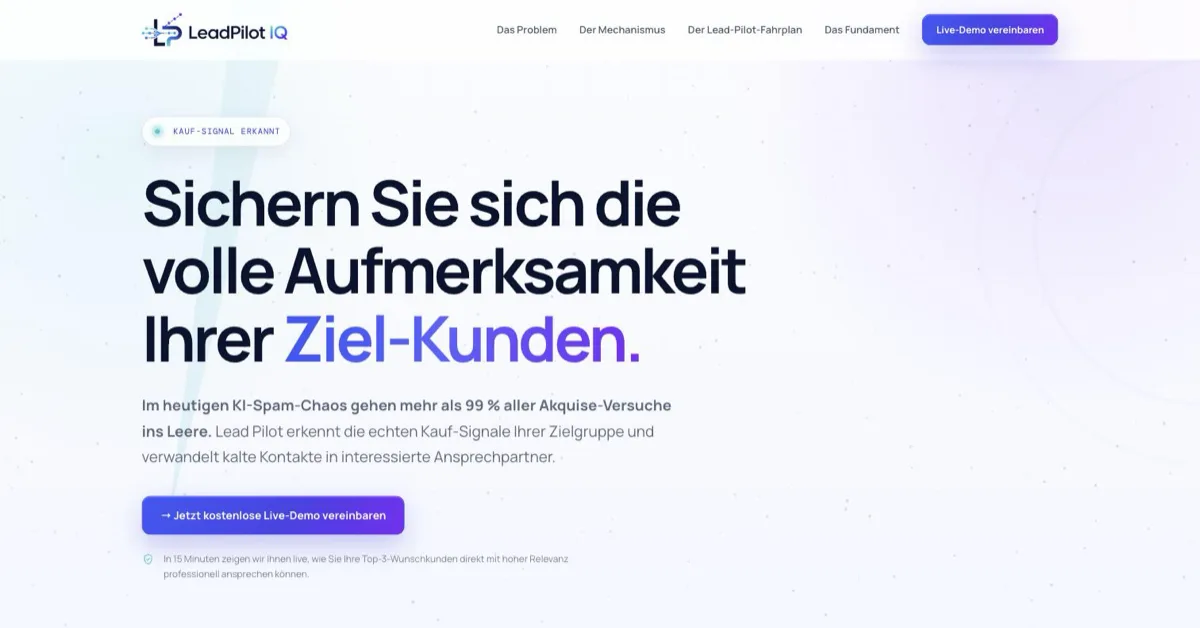
Home page of Lead Pilot, an outreach application for B2B sales.

An example from our own house

Lead Pilot

Outreach engine for B2B sales.

Lead Pilot picks up buying signals in the target market and prepares individual approaches from them — on a knowledge graph built over the user’s released sources.

  • A standalone application, not a prototype
  • Knowledge graph over released company sources
  • On the same base as your workflows
  • In operation
See Lead Pilot

Lead Pilot is NC AGENTIC GmbH’s own product, not a client project. What makes sense as an application in your case and what makes sense as a workflow, we settle before you place the order.

Controls & company

Trust comes from states you can inspect.

Approvals and rights
Agent identity, permissions, policy, and human gates constrain every relevant action.
Run evidence
Source references, actions, approvals, exceptions, and results remain traceable for every workflow run.
Supported configurations
Deployment, source, and model options are described only for the configuration that is implemented and supported.

Your contact

Gerald Fehringer

Managing Director · NC AGENTIC GmbH

In the intro call you speak directly with me, not with a sales team. More than 25 years of consulting and process work in corporates and mid-sized companies, several ventures of my own, and daily hands-on work building agentic workflows today. I am personally accountable for the quote, the scope, and the acceptance.

startvisor.AI · Hamburg

startvisor.AI is an owner-run company based in Hamburg. We commit to support hours and cover only to the extent we can actually deliver.

AIonicOS in operation

21
models in use
8
model providers
22
MCP connectors
~65
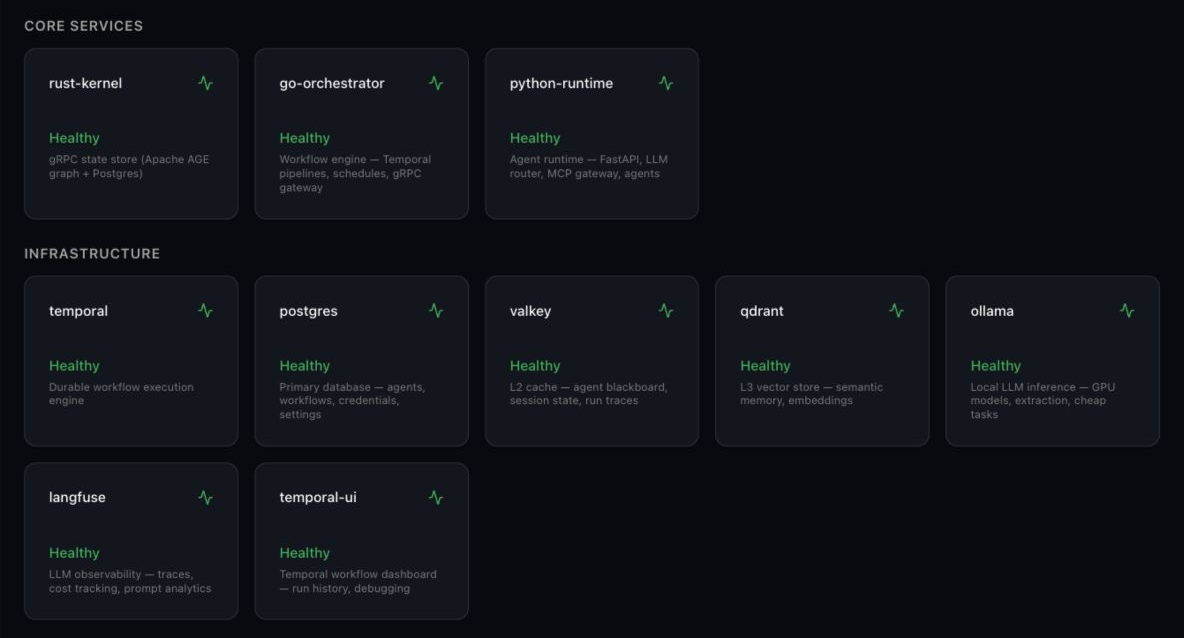
services running

The state of the running platform, not of the largest possible configuration.

AIonicOS · live in operation

One platform for real company work.

Connects your systems, carries out defined work, and keeps sources, approvals, and outcomes traceable.

Inspect AIonicOS in detail
  • Live platform
  • Your systems
  • Controlled execution
  • Grounded knowledge
AIonicOS system overview showing the status of running platform services and controls.
Platform in operation Systems, agents, and controls in one running environment.
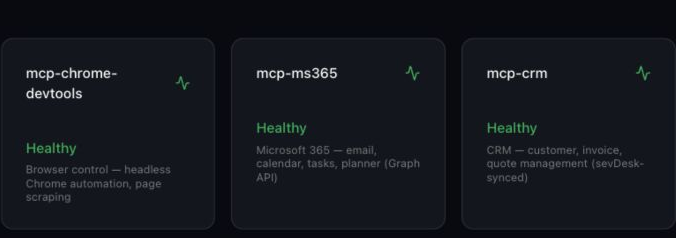
AIonicOS integration overview showing connected company systems and safeguards.
Your sources Connect the systems your company already uses.
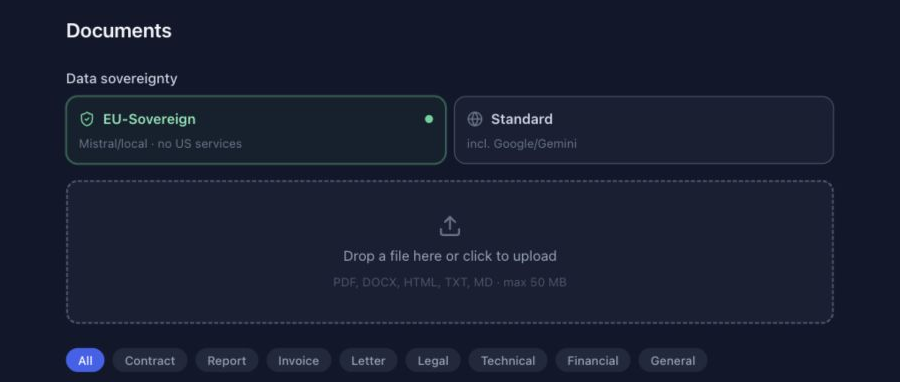
RAG/CAG knowledge platform in AIonicOS showing controlled document intake and processing status.
Enterprise knowledge Our dedicated RAG/CAG service: extracted, checked, and evidenced with sources.
How company knowledge is made usable

Approved document sets are indexed, complex documents are evaluated as a whole, and every answer is backed by its source. The models, retrieval methods, and review steps behind this are described in detail on the AIonicOS product page.

Product views use demo data; sensitive operating details are not included.

Frequently asked

What companies want to know before they commission us.

What does a first workflow cost?

Implementation is delivered at a fixed price, which we name once the process, source systems, and access are clear. Hosting, AI usage, and maintenance and support are quoted separately. The intro call is free; a deeper process analysis before we quote is commissioned separately.

How long does it take to go live?

With a clearly bounded scope, available access, named owners, and completed testing and acceptance, a first workflow is live within days to weeks. If interfaces, test data, or approvals are missing, the start shifts accordingly — we name these dependencies before you commission anything.

Where does our data run, and which models are used?

The default is a separate instance per customer at Hetzner, in German data centres. If you want the workflow to run in your own environment, that is possible; we cost the additional effort against your requirements and show it separately. Which model handles which step, and the path your data takes, is set out in writing before implementation. We do not issue blanket compliance guarantees.

Do we have to replace our systems?

No. We work against your existing systems through their interfaces and permissions. If a required interface is missing, we say so before you commission the work — rather than working around it during implementation.

Who works on our project?

startvisor.AI is owner-run. Your contact for the quote, the implementation, and the acceptance is Gerald Fehringer; for bounded tasks we bring in named specialists. We do not present ourselves as a larger team than we are.

Can we see what the result looks like beforehand?

Yes. The example workflow on this page shows structure, control points, and result using synthetic data — it is explicitly not a customer project. For your case, test cases are built from real transactions before acceptance.

Do you also do AI projects that are not process automation?

Yes. A bounded workflow is the most common way in, but not the only one. We also connect AI capabilities where no single process is being automated: indexed company knowledge with source references, extraction and reconciliation across existing systems, or prepared decision material. Scope, acceptance criteria and the fixed price follow the same method.

Can you build us an application of our own?

Yes. Where a standalone application does more than a workflow, we build it as software of its own on the same base — with AI Tactical Engineering, automated checks and technical acceptance before it goes live. Lead Pilot for B2B sales is an example from our own house. What makes sense in your case we settle before you place the order.

Next step

Bring us the process that costs you the most time.

30 minutes on the process, the systems involved, the accountable owners, and the acceptance criteria. Afterwards you will know whether it is suited to a first fixed-price workflow — and roughly what it costs.